

An edible image is happiest before cake day when it is left alone: sealed, flat, dry, and at room temperature. The exact usable window comes from the seller's packaging and instructions, but most cake-day problems come from moisture and handling, not from a sheet quietly sitting in its sealed bag.
That is useful news when you are planning ahead. You can order a custom topper before the party rush, keep it protected, then apply it when the frosting is ready. This guide explains what affects an edible image's condition, where to store it, when refrigeration matters, and how to decide the best moment to put it on the cake.
The Short Answer: Follow the Sheet, Protect It From Moisture
There is no single shelf-life promise that fits every edible image. Frosting-sheet recipes, print methods, packaging, and the date a seller prepared the sheet can differ. The most dependable answer is the care information that arrives with your own order. For FabQuilt 3D toppers, the basic rule is simple: keep the sheet sealed in its bag, flat, and at room temperature. Do not freeze or refrigerate an unused topper.
That guidance matches the handling advice from Icing Images, which recommends keeping edible sheets protected until it is time to apply them. The goal is not to make the sheet cold or extra dry. It is to keep it away from surprise humidity, steam, and anything that can soften the backing before you are ready.
If you are planning a party weeks ahead, order timing is still worth asking about when you place your order. A seller can tell you how their particular product is packed and how far ahead they recommend ordering. Once it arrives, store it properly and resist the temptation to open the bag just to take another look. The sealed bag is doing useful work.
What Changes How Long an Edible Image Stays Cake-Ready?
An edible image does not usually fail all at once. It becomes harder to work with when the sheet absorbs too much moisture, dries in an awkward position, or gets bent or scratched. Think of it as a printed frosting layer rather than ordinary paper. It needs gentle handling and a stable environment.
Packaging matters. A sealed bag protects the printed sheet from kitchen humidity and accidental splashes. Once opened, the sheet has less protection, so wait until the cake is frosted and your work area is ready before removing it.
Flat storage matters. A curled or creased topper can be harder to center and smooth. Keep it on a level shelf, in a drawer, or in another place where nothing heavy can press a corner. Do not stand it upright between cookbooks, tuck it into a crowded bag, or leave it under party supplies.
Temperature swings matter. The kitchen can be perfectly fine, but the spot beside a steaming dishwasher, a sunny window, or a warm oven is not. Humid air and condensation are the bigger concerns. A calm, dry cupboard or drawer is more useful than a colder place.

How to Store an Edible Cake Topper Before the Party
Good storage takes less than a minute. Leave the topper in its original sealed bag. Place it flat on a smooth shelf, in a drawer, or on a clean tray where it will not be bent. Keep it at normal room temperature, away from direct sunlight, kitchen steam, and anything damp.
A drawer can work well because it keeps the sheet out of the way, but choose one that is dry and not jammed full of utensils. A high pantry shelf can work too, as long as you can lay the sheet down flat. Avoid the refrigerator, freezer, garage, porch, car, or windowsill. Those places invite the conditions that make a frosting sheet frustrating to peel and place.
There is also no need to put the unopened sheet in a special food container. Its own sealed packaging is the important part. If you need to transport it, keep it flat between two clean pieces of cardboard or inside a rigid folder, then move it somewhere dry as soon as you arrive. Do not leave it in a hot car while you finish other errands.
When you are working around a busy kitchen, give the topper its own dry zone. Keep it away from a boiling pot, a just-washed counter, and a damp dish towel. The sheet only needs to leave the bag once. Make that moment count by clearing your cake stand, drying your hands, and having a spatula ready before you open it.
Why Refrigeration Is Not for an Unused Edible Image
Refrigeration sounds protective, especially when you are thinking about food, but an unused frosting sheet is different from a finished cake. Cold storage can introduce moisture as the sheet moves between temperatures. That moisture can make the backing cling more tightly, cause the image to feel sticky, or create ripples when the sheet meets frosting.
The same goes for the freezer. Freezing does not give you a better storage result, and the thawing process adds another chance for condensation. Keep the unopened topper at room temperature instead. The exception is not the sheet itself, but the finished cake. If the cake's filling or frosting needs refrigeration, refrigerate the cake after the image has settled and protect the top from contact.

If you have taken a frosted cake out of the refrigerator, do not rush to put the image on while the cake is sweating. Let the cake sit until the top is dry to the touch. Blot moisture from the sides or cake board if needed, but do not press a towel across the top. A soft, dry buttercream surface gives the image a much better chance to settle smoothly.
When Should You Put the Image on the Cake?
For a smooth buttercream cake, apply the image when the frosting is fresh, level, and no longer visibly wet. The cake should be cold enough to hold its shape, but the top should not be covered in condensation. That usually makes the last stretch of cake decorating the right time: frost the cake, smooth the top, let any refrigerator moisture disappear, then apply the topper before adding the final border.
Applying the image too early is not always a disaster, but it gives moisture more time to affect the design, especially on whipped toppings or very moist frostings. Applying it too late creates another problem: you may be trying to peel and center the sheet while guests are arriving. A good middle ground is to prepare the cake in advance, then add the edible image when the cake is close to its final home or carrier.
For travel, it is usually easiest to apply the image once the cake is on its final board. That avoids moving a decorated top between boxes or stands. Once the image is on, give it a few quiet minutes to settle. Then add a piped border, sprinkles around the edge, or other decorations that do not drag across the printed surface.
A Cake-Day Plan That Keeps the Design Looking Its Best
Start by checking the topper's orientation while it is still in the bag. Identify the top edge of a photo or design, and make sure your cake has a smooth landing area. If you are using a rectangle, decide which side will line up with the cake's front before you peel the backing. That small pause is much easier than adjusting the image after it touches frosting.
With clean, dry hands, remove the image from its backing and lower the center onto the cake first. Ease the rest of the sheet down from the middle toward the edges. Gentle pressure is enough. A fresh buttercream surface will do most of the work for you. For a full walk-through, read the edible image application guide before you begin.
After it settles, protect the cake with a tall box or carrier that leaves room above the top. Plastic wrap, a low lid, or another decoration pressed against the image can mark it. If the finished cake needs refrigeration, put it in its carrier first and limit repeated trips between cold and warm rooms. When it is time to serve, uncover it carefully and let the design have its moment.

What to Do if Your Topper Feels Sticky, Curled, or Hard to Peel
First, do less. Do not add water, put the sheet in the refrigerator, or force a corner loose. Keep the sheet in its bag and give it a few minutes in a dry room. Then gently flex the backing paper back and forth. Start from a corner and peel the backing away from the image slowly, instead of lifting the delicate image upward.
If the sheet has a small curl from handling, place it flat while it is still protected and give it a little time. If it is badly bent, visibly wet, or damaged, contact the seller before you try to rescue it on the cake. A quick answer is better than experimenting on the part that everyone will photograph.
When the problem is the cake rather than the sheet, check the frosting. A dry, crusted buttercream top may not give the image enough moisture to adhere. A very wet top can create wrinkles. A thin fresh layer of smooth buttercream in the placement area is often the cleanest reset. Then take your time and place the image center first.
Planning a Custom Topper Without the Last-Minute Stress
A custom image lets the cake carry the photo, theme, or inside joke that makes the celebration personal. It also means you can plan the visual centerpiece before you are balancing frosting, candles, and a crowded kitchen. Start the conversation through the custom topper page, or see the practical details on custom edible cake toppers.
Once the topper arrives, the storage plan is refreshingly simple: leave it sealed, flat, and dry until the cake is ready. That gives you one fewer thing to solve on party day, and it helps the image look as crisp on the cake as it did when you picked the design.
Frequently Asked Questions
How long do edible images last?
The most reliable answer is the date and storage guidance supplied with the specific frosting sheet. Kept unopened, flat, dry, and at room temperature, an edible image is designed to be stored before cake day. Check the seller's instructions rather than relying on a general number, because the sheet and its packaging matter.
Should I refrigerate an edible image before I use it?
No. Keep an unused edible image sealed at room temperature. Refrigerators and freezers can introduce moisture, which can make the sheet harder to release from its backing or affect the printed design.
Can I put a finished cake with an edible image in the refrigerator?
You can refrigerate a finished cake when the cake itself needs refrigeration. Let the image settle on the frosting first, then use a tall box or carrier so nothing touches the top. Condensation is the concern, so minimize temperature changes and uncover the cake carefully.
What should I do if my edible image feels soft or sticky?
Keep it in its bag and let it rest in a dry room for a few minutes. Avoid adding water. Once it feels easier to handle, gently flex the backing and peel slowly from a corner.
Related Posts
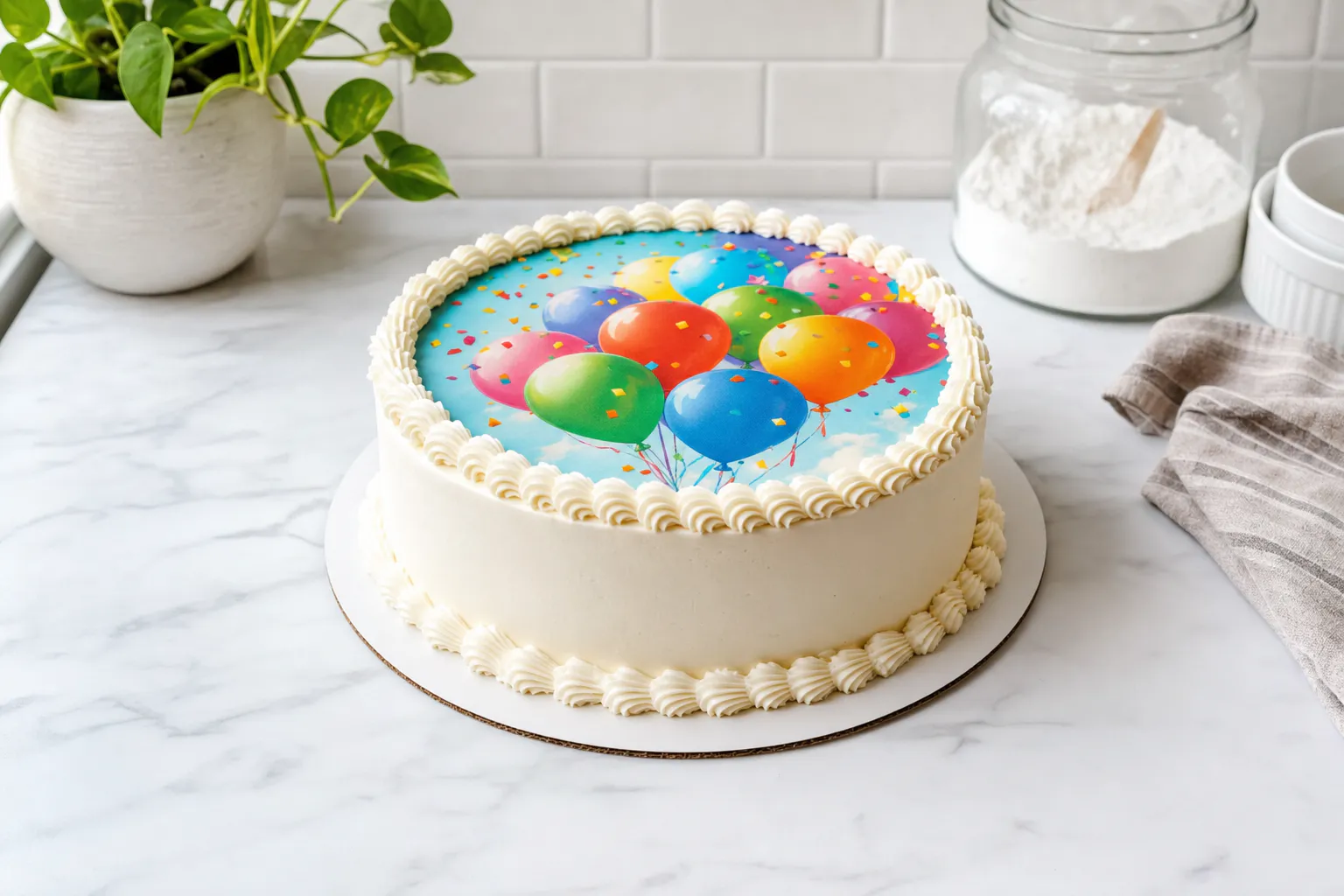 How to Apply an Edible Image to a CakeA simple step-by-step guide to placing an edible image on a cake without wrinkles, bubbles, or last-minute stress.
